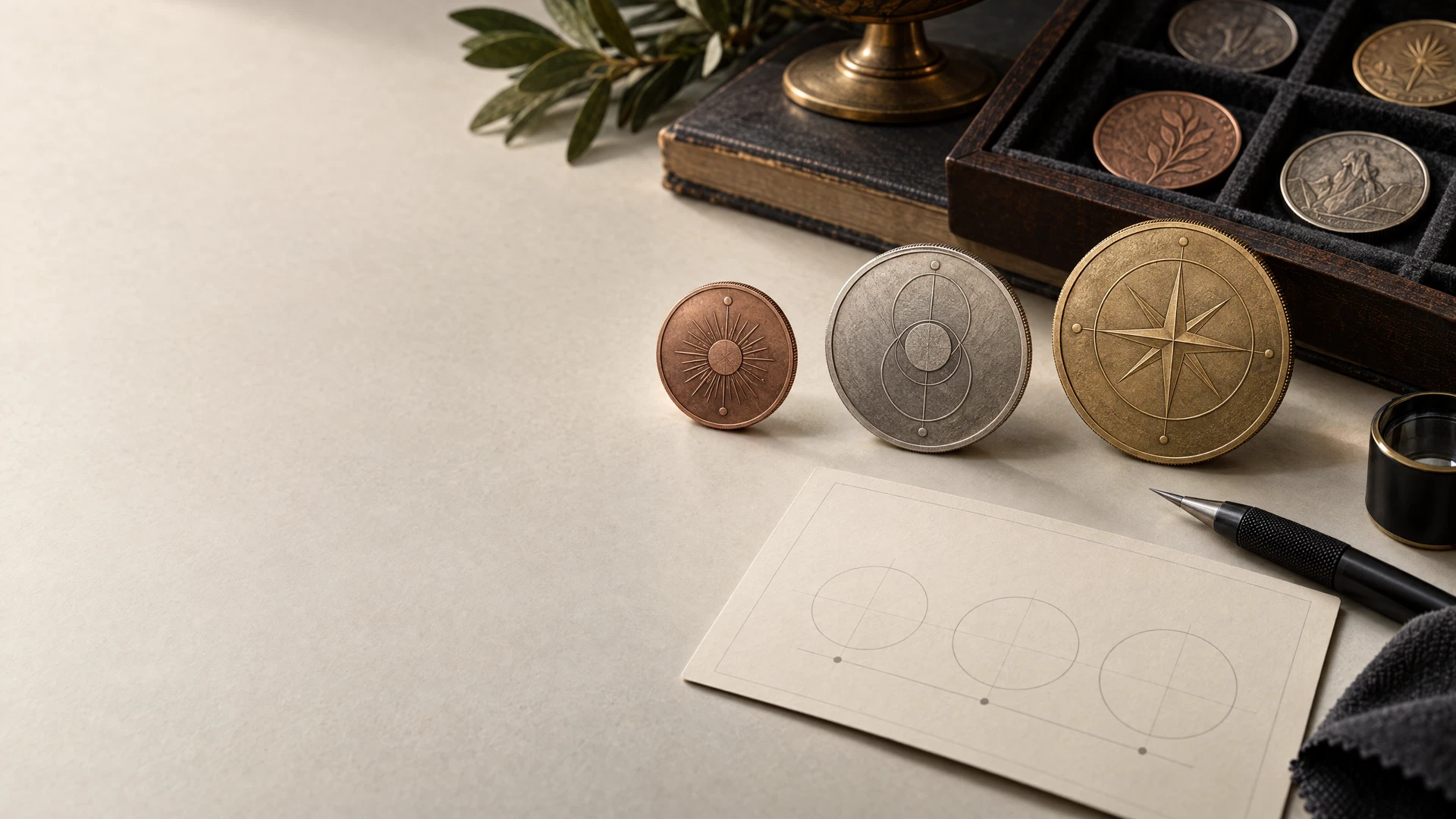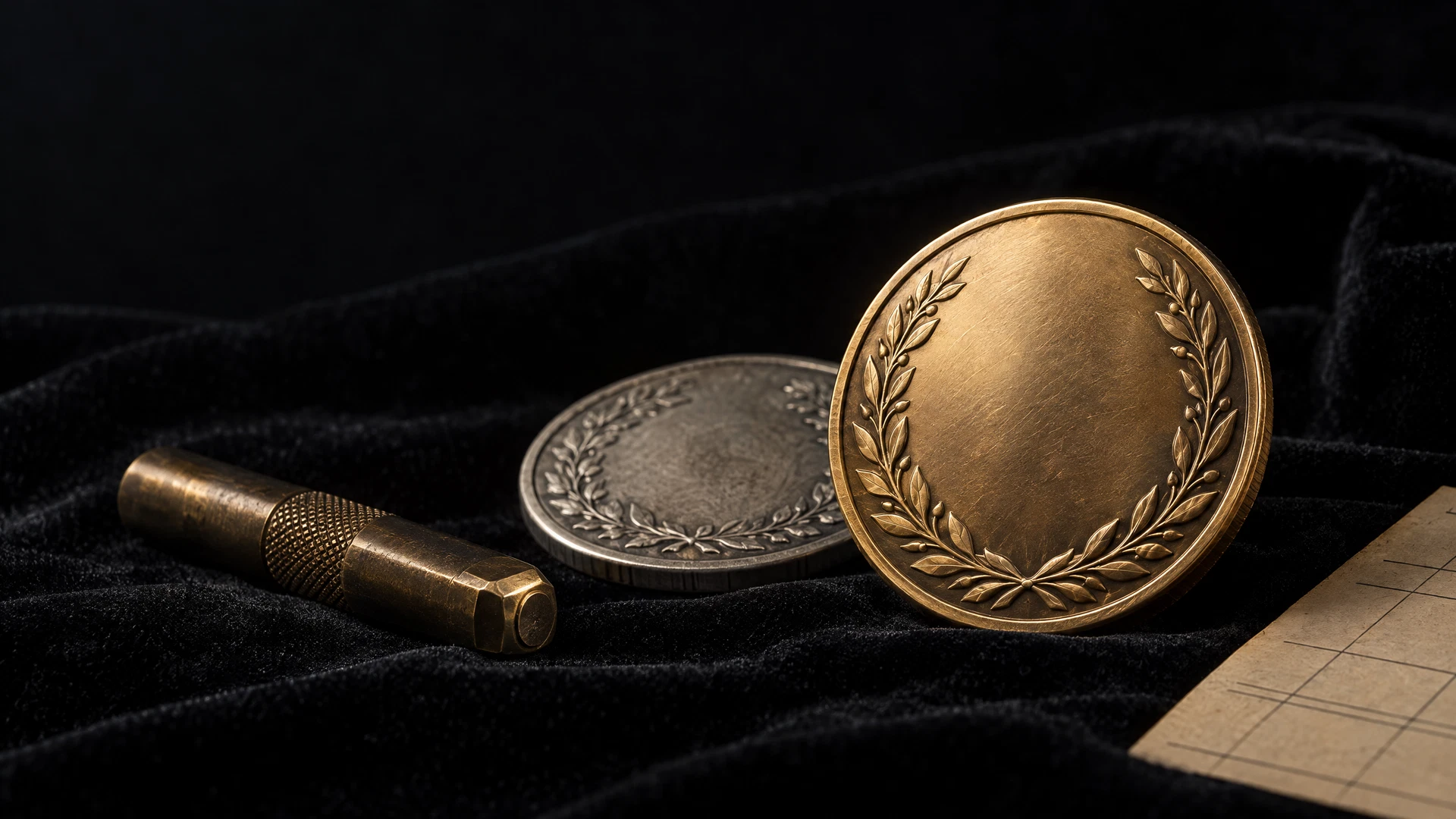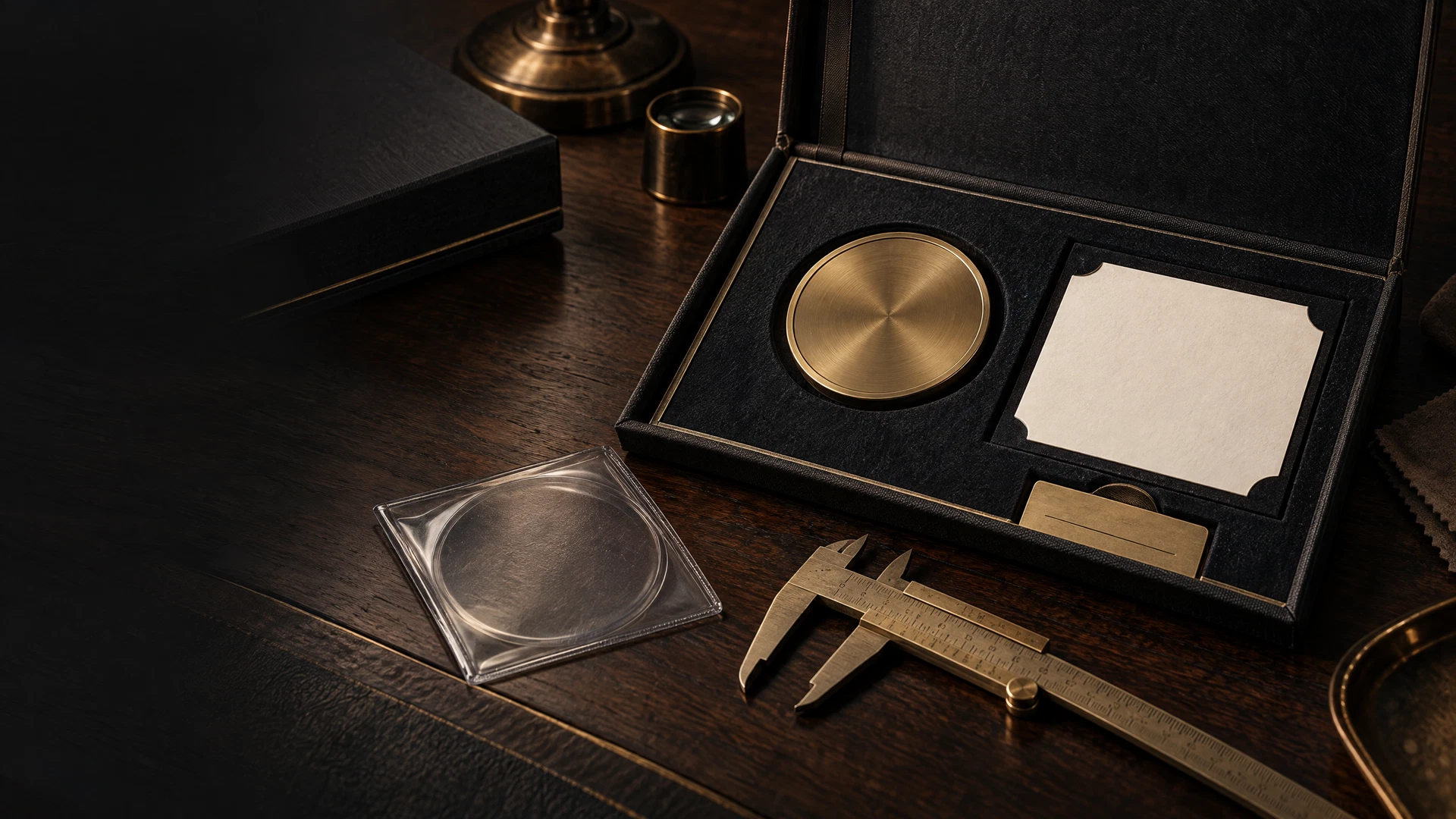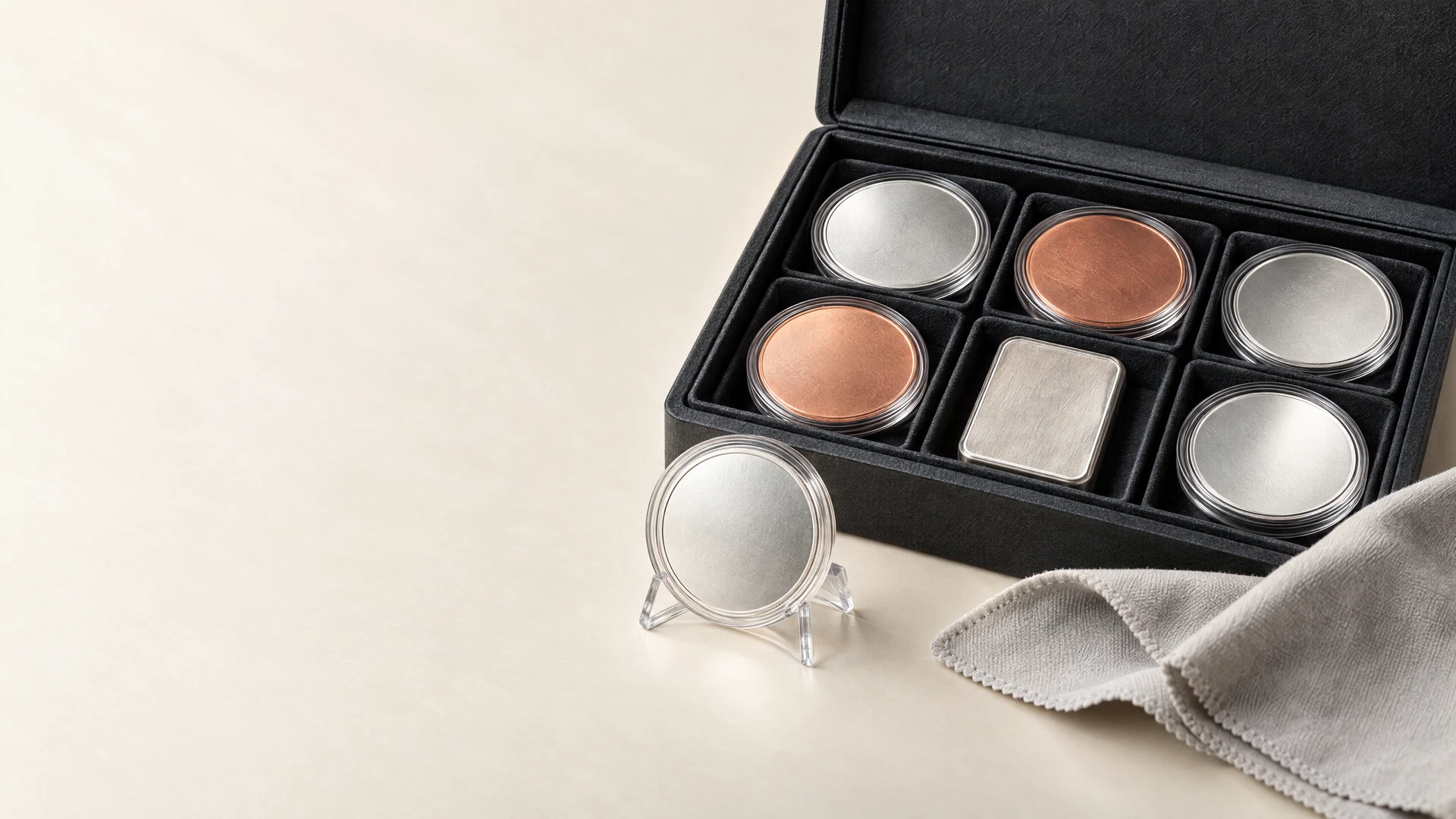
The safest way to store and display collector rounds and bars is to give every piece a clean, stable home that limits handling, abrasion, dust, moisture, and contact with unknown materials. Start with storage: a well-supported piece is easier to inspect, move, and show without touching its surface.
Museum-minded habits are enough. Separate pieces so they cannot rub together, keep conditions dry and consistent, and treat every move from drawer to display as a handling event. This guide focuses on physical care and presentation; the collector guides library adds collection context and recordkeeping.
Start with a low-risk environment
Environment does more work than any individual holder. Metals corrode more readily in moist conditions, and dust can trap moisture and contaminants. CCI advises clean air, controlled relative humidity, and good housekeeping; its mixed-collection guidance places stable metals in a 35% to 55% relative-humidity range. At home, choose a consistently dry interior location, not a basement, attic, garage, windowsill, or shelf near heat (CCI, Storage of Metals).
Keep the surrounding shelf or cabinet clean, but do not make polishing a routine. Avoid cleaning fluids, rubbery materials, and freshly finished wood nearby. If powdery material, a spreading green spot, lifting layers, or unfamiliar residue appears, isolate the piece and seek conservation advice.
- Favor an indoor location with steady conditions over a dramatic but exposed display spot.
- Keep metal away from direct water risk, cooking vapors, and exterior-wall condensation.
- Check the location after seasonal changes, leaks, renovations, or a move.
Give each round or bar its own support
A holder should stop movement, prevent objects from touching, and make examination possible with little handling. CCI recommends individual protective holders and names inert, archival-quality plastics including polyethylene, polypropylene, polyester, polystyrene, and acrylic. It cautions against PVC, whose plasticizer can damage copper-alloy objects (CCI, Basic Care of Coins, Medals and Medallic Art).
Use a correctly sized enclosure or shallow, lined tray for a round so it cannot roll. Support a bar across its full underside, not on narrow rails. An original presentation case deserves inspection; an attractive case is not automatically safe for long-term contact. If a material is unknown, use a stable holder as a barrier.
Add a simple location code to the holder or inventory. It reduces searching and makes a changed condition easier to notice.
- One holder or clearly divided space per piece.
- No loose stacking, even for pieces that appear similar in size.
- Support the whole object before opening a drawer or moving a tray.
Design a display that protects while it shows
A good display makes the design visible while keeping the piece still. Use a mount or shelf that supports the object from below, with padded contact points and enough room for removal without brushing a neighbor. The National Park Service advises padded mounts and notes that display environments can change more than storage spaces (NPS, Curatorial Care of Metal Objects).
Treat a case interior as storage. Untreated wood, some paints, adhesives, textiles, foam, and rubber may emit gases or leave residues. CCI notes that wood and wood-pulp products can release sulphur compounds and organic-acid vapors; a clean display with fewer materials is easier to manage (CCI, Storage of Metals).
For pieces with paper, fabric, or a ribbon, light also matters. CCI notes that ribbons can fade, so keep mixed-material objects out of prolonged direct sun.
- Use stable, padded contact points rather than clips or hard bare-metal rests.
- Keep cases away from sun, heat registers, and frequently opened exterior doors.
- Make security part of the layout: a display should not invite casual handling.
Handle, inspect, and document deliberately
Handle only when needed. Prepare a clean work surface, move one object at a time, and hold a round or bar by its edges when practical. Skin oils and salts can mark or etch metal, so CCI and the NPS recommend clean gloves; CCI notes that latex can tarnish silver over time (CCI, Basic Care of Coins, Medals and Medallic Art).
Inspect on a schedule rather than through constant touching. Record the date, location, images, and visible changes. Consistent lighting and orientation make comparisons useful. For accurate terms in those notes, see the site's minting basics.
Separate care from cosmetic intervention. Cleaning and polishing can remove original surface material or leave residues. If condition is changing, document it, reduce handling, and consult a qualified conservator before attempting a remedy (NPS, Curatorial Care of Metal Objects).
- Use dated photographs as a condition baseline, not as a sales record.
- Note the holder and display location as well as the object itself.
- Pause before any cleaning, coating, or repair that cannot be easily reversed.
Use storage and display as part of the collection story
Presentation can explain a collector-led project without claims about rarity or future value. A quiet label can identify the theme, designer if applicable, date, and documented story. Keep fuller inventory detail separate so labels do not touch metal.
Before changing a whole cabinet, test a small group. Can each piece be removed without contact, checked for movement, and placed safely during inspection? Those questions often reveal a better layout than an elaborate presentation.
- Use labels to provide context, not investment assertions.
- Keep inventory details separate from objects so labels do not touch metal.
- Prefer a display routine you can maintain over a complicated arrangement you cannot inspect.
Frequently asked questions
Should collector rounds and bars be stored in the same place?
Yes, if each piece has its own support and can be retrieved without contacting another object. Use holders, tray divisions, or spacing; do not allow loose stacking or sliding.
Is it safe to display rounds or bars in a wooden case?
Do not assume so. CCI warns that wood can emit vapors that may corrode metals, especially in enclosed spaces. If materials are unknown, avoid direct contact and use a stable barrier or another approach.
How often should I inspect a displayed piece?
Check every few months and after a leak, move, renovation, or major seasonal shift. Look for holder deterioration, dust, movement, spots, residue, or other changes, then compare with dated photographs.
Should I clean tarnish or fingerprints from a collector piece?
Avoid automatic cleaning or polishing. The NPS warns that over-cleaning can remove original metal and leave residues. Record the condition first; if a change concerns you, seek advice from a qualified conservator.
A project conversation
Planning a collector-led piece?
If your storage or presentation ideas are helping shape a future commemorative or collector project, a custom project review is a practical place to discuss the concept, artwork references, intended use, and the details that need project-specific confirmation.
Start a project reviewClosing perspective
The most reliable care routine is quiet and repeatable: separate the pieces, control the setting, minimize handling, and make condition checks easy. That approach protects both the surface and the experience of returning to a collection over time.
Start with one drawer, one case, or one displayed group. Once the supports, labels, and inspection habit work there, the same principles can guide the rest of the collection.