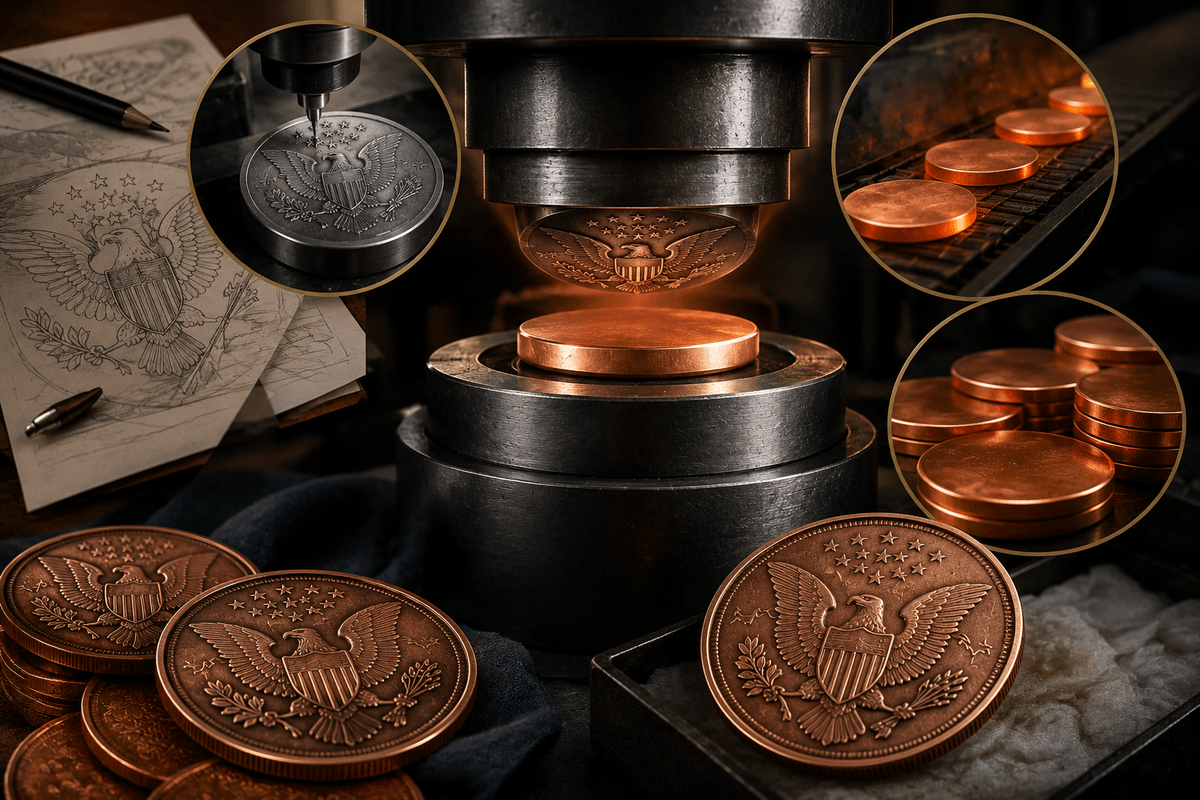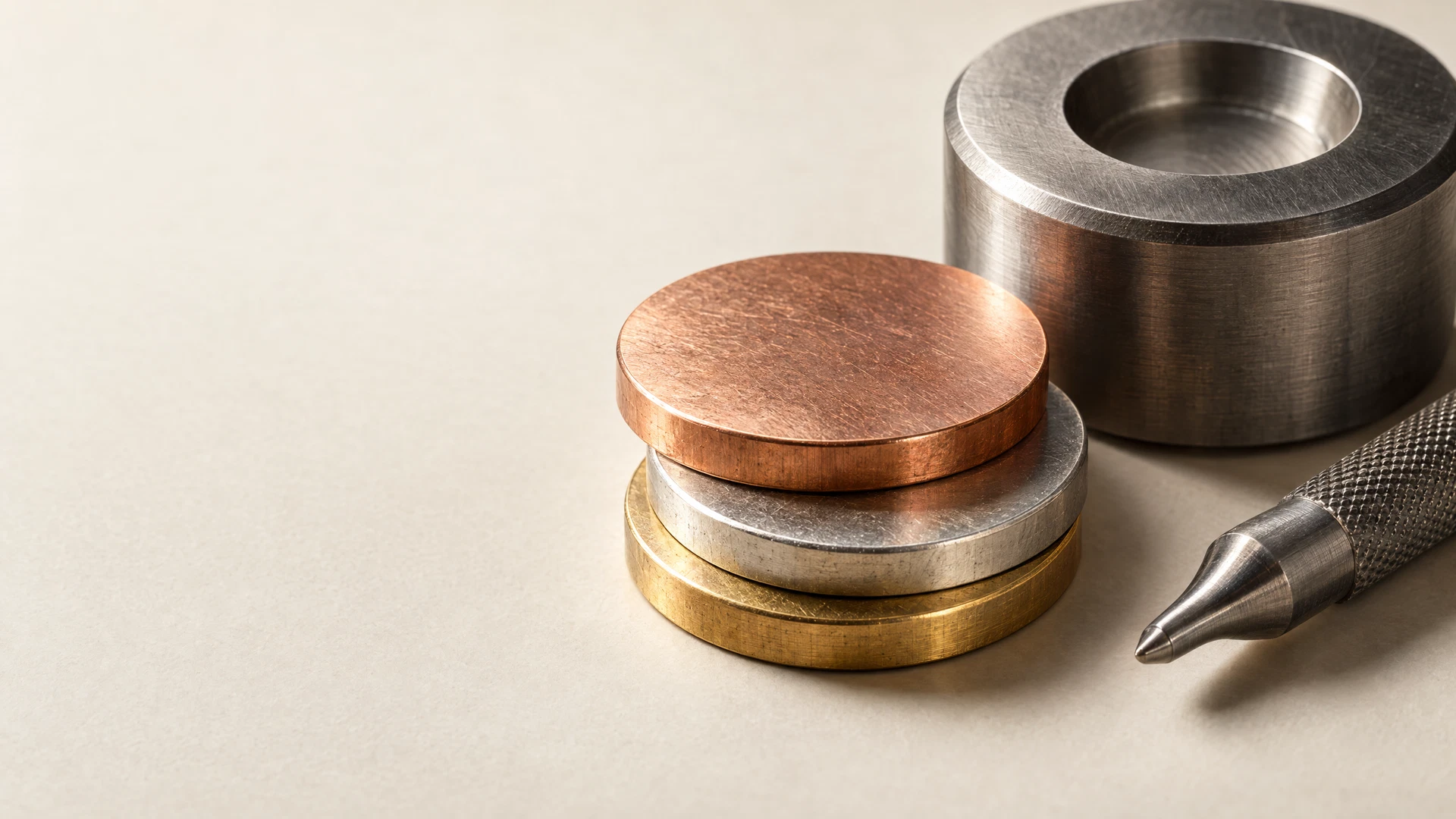
A coin blank is an unstruck piece of metal prepared to become a coin, medal, or other struck piece. In the most precise production vocabulary, a blank is the flat disc first cut from metal, while a planchet is that disc after its edge has been raised into a rim. In ordinary collector and mint conversation, though, people often use blank for either stage.
The distinction separates starting material from finished design. It clarifies whether a discussion concerns a prepared surface or the completed piece. This guide focuses on vocabulary rather than the complete die-striking process.
Blank and planchet: the precise distinction
A blank is the starting disc
The U.S. Mint defines blanks as flat metal discs that will eventually become coins. That makes blank a term for a plain, unstruck disc rather than a completed object (U.S. Mint, "Coin Production").
A planchet is a prepared blank
The same U.S. Mint reference calls a blank a planchet after upsetting forms a raised rim. Thus, a planchet began as a blank, but a blank has not necessarily reached the planchet stage (U.S. Mint, "How Coins Are Made: Coin Production Terminology").
Why you will hear both words
Usage is broader outside a factory sequence. The Royal Mint Museum glossary calls a planchet a disc-shaped metal blank, while the U.S. Mint allows blank as a general pre-strike term. Ask whether the speaker means a flat disc, a rimmed prepared piece, or an unstruck piece generally (Royal Mint Museum glossary).
Why the rim matters before a design exists
A raised rim turns a plain disc into a more defined design platform. The U.S. Mint explains that upsetting pushes metal up around the edge, and that the rim helps protect the finished coin from wear and makes it stackable (U.S. Mint, "Coin Production").
Think of the rim as a boundary
For a collector-led concept, the rim marks where the face meets the outer edge. That boundary affects how a border, lettering, or central motif may read. Describe the visual relationship you want—open field, close border, framed emblem, or room for wording—rather than leading with manufacturing jargon.
Keep separate features separate
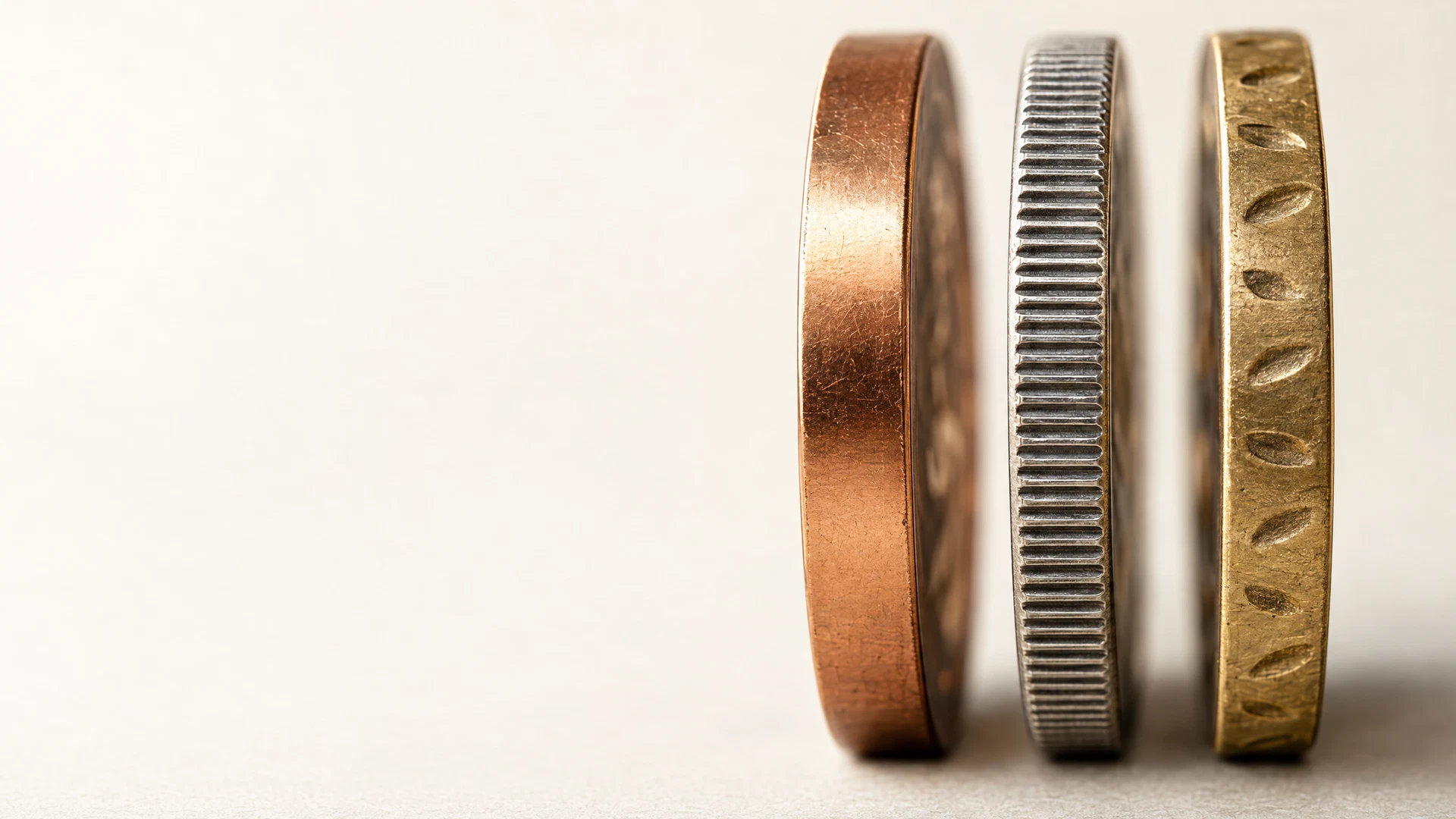
Rim, edge, field, and relief are related but not interchangeable. The rim is the raised perimeter; the edge is the narrow outside surface; the field is the background behind a design; and relief is the design’s height above that field. Correct terms help a reviewer understand intent without assuming a particular treatment is available.
How this vocabulary helps a private-mint brief
A good brief does not need to sound like a production order. It should communicate what the piece should do and look like. Here, blank and planchet are shorthand for early choices about silhouette, usable face area, edge treatment, and framing.
Use plain language first
Start with purpose, audience, and the central image or message. Then describe the shape you picture and any visual priority near the perimeter. A shared description is better than a borrowed technical word that means something different to the reviewer.
The private minting guides put this vocabulary in context with other coin-making basics. If the project is copper-led, the separate guide on how copper coins are made explores the wider production story; it is a better next read for process detail than this terminology-focused article.
- Describe the visual role of the outer border or edge, not just a term you have heard.
- Identify text, symbols, or details that must remain easy to read near the perimeter.
- Keep the project’s purpose and artwork direction ahead of assumptions about a particular manufacturing approach.
What a blank can tell you—and what it cannot
An unstruck disc can communicate basic physical intent, but not settle every design question. It does not show how small lettering will read, how a high point will relate to the rim, what edge treatment fits, or whether an artwork file is ready for a particular method.
Avoid treating blank, planchet, coin, round, and medal as automatic legal labels. Here, blank and planchet describe manufacturing stages or prepared material; this vocabulary guide does not establish the legal status or naming of a finished piece.
For a concept that is ready to move beyond vocabulary, organize the purpose, artwork references, and open questions before asking for review. The custom project planning resource is the appropriate place to frame that next conversation.
Frequently asked questions
Is a coin blank the same as a planchet?
Often, people use the terms loosely for an unstruck metal piece. In the U.S. Mint’s more exact production terminology, a blank is the flat disc and a planchet is the blank after upsetting has formed a rim. State which meaning you intend when precision matters.
Why do collectors call a planchet a blank?
Because blank is widely used as a general pre-strike term. The U.S. Mint notes that this broader use is acceptable, and the Royal Mint Museum’s glossary also describes a planchet as a metal blank. Context, rather than a single universal usage, usually resolves the wording.
Does every coin blank have a raised rim?
Not in the strict stage-by-stage sense. A flat cut disc is a blank; after its edge is raised in the upsetting step, the U.S. Mint calls it a planchet. In casual usage, however, someone may still call the rimmed pre-strike piece a blank.
Is a blank already a coin?
In production terminology, no: it is a prepared, unstruck piece. The U.S. Mint describes the planchet as becoming a coin when the design is struck onto it. Separately, whether a finished object is legally a coin is a contextual question, not a conclusion supplied by the word blank.
A project conversation
Bring the right questions to a project review
If you have a collector-led concept, share the purpose, artwork references, and the design questions that are still open. A custom project planning review can help identify the details that need project-specific confirmation.
Start a project reviewClosing perspective
A coin blank is the simple starting disc behind a more complex finished piece. Planchet is the more specific term when that disc has been prepared with a rim, but everyday usage overlaps. Knowing both meanings keeps a discussion accurate without making it needlessly technical.
Use the terms to describe intent, not to pre-decide every manufacturing detail. When the border, edge, lettering, or central image matters to a collector-led piece, a clear visual brief will carry the conversation further than terminology alone.